Entgiften nach Dr. Klinghardt
Wer sich schon einmal mit dem Thema Schwermetallvergiftungen im menschlichen Körper beschäftigt hat, wird von Dr. Klinghardt gehört haben.
Dr. Klinghardt ist einer der bekanntesten Experten auf diesem Gebiet und hat erforscht, auf welche Weise die Vergiftungen, die beispielsweise durch Amalgam-Zahnfüllungen unbemerkt entstehen, bekämpft bzw. die Ablagerungen der giftigen Stoffe aus dem Körper geleitet werden können.
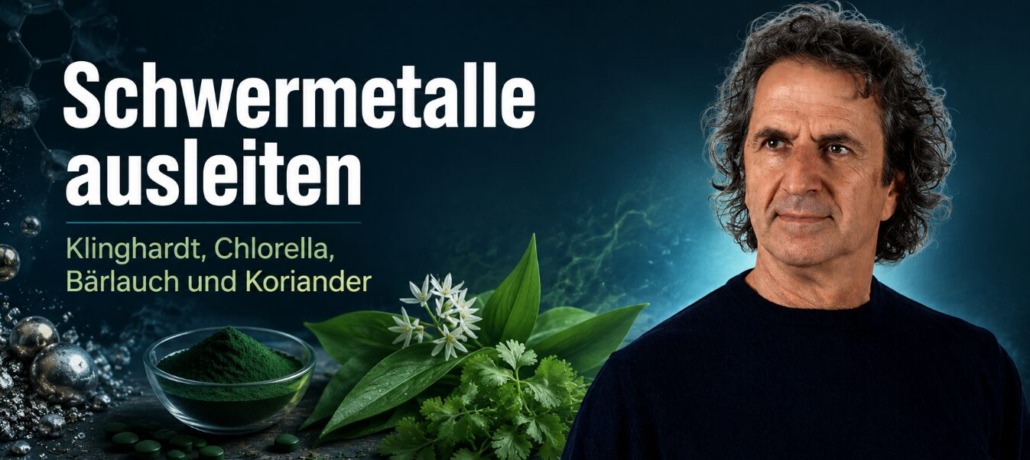
In diesem Beitrag will ich Ihnen einen allgemeinen Überblick zum Thema geben und natürlich eines der ersten Protokolle von Dr. Klinghardt zur Entgiftung vorstellen und zwar die Entgiftung mittels: Chlorella, Bärlauch und Koriander.
Dr. Klinghardt setzt heute je nach „Vergifter“ auf unterschiedliche Protokolle, die heute (2026) auch recht komplex und umfangreich sein können. Aber das alte Chlorella / Bärlauch / Koriander funktioniert auch immer und kann als „Universal-Entgifter“ durchaus noch gelten und leistet gute Dienste.
Beginnen wir aber zunächst hiermit:
Metalle im Körper und Symptome einer Schwermetallvergiftung
Wenn die Mineralstoffspeicher des Körpers nicht ausreichend gefüllt sind, können sich Schwermetalle mit den Nervenenden verbinden. Der molekulare Effekt besteht dabei in einem Angriff auf die Proteine. Die schwefelaffinen Metalle brechen Disulfid-Brücken innerhalb der Eiweißkette auf und heften sich an die freigewordenen Gruppen.
Dies verändert die Gestalt der Proteine, die dadurch in ihrer Funktion beeinträchtigt oder ganz funktionslos werden. Daneben blockieren Schwermetalle auch die katalytischen Zentren vieler Enzyme, die dort metallische Ionen als Kofaktoren brauchen.
Diese werden von den Schwermetallen verdrängt und das Enzym kann seine Aufgabe nicht mehr erfüllen. Das erklärt, warum die toxischen Metalle Körpervorgänge wie den Nährstofftransport, die Zellatmung oder auch die DNA-Transkription unterbinden bzw. behindern.
Bei betroffenen Patienten wäre da in erster Linie an das Schwermetall Quecksilber zu denken. Dieses stammt fast immer aus den Amalgamfüllungen der Zähne und lagert sich gerne im Gehirn, an den Nervenzellen oder im Bindegewebe ab. Während der Schwangerschaft kann das Quecksilber auch über die Amalgamfüllungen der Mutter in den Körper des ungeborenen Kindes gelangen.
Neben Quecksilber kommen auch Kadmium, Aluminium und Blei in Frage. Die Speicherung der letztgenannten Metalle wird durch das Vorhandensein von Quecksilber auch noch begünstigt.
Eine Ausleitung von Quecksilber führt daher dazu, dass auch die anderen Metalle besser ausgeleitet werden können. Die Beschwerden, die die Vergiftung mit Metallen wie Quecksilber hervorrufen kann, sind meist unspezifisch und beinhalten Müdigkeit, Schlaflosigkeit, Kopfschmerzen, Schwindel, Verdauungsprobleme wie Durchfall oder Übelkeit, aber auch eine Verschlechterung der Gedächtnisleistung, wovon insbesondere das Kurzzeitgedächtnis betroffen ist.
Übrigens: Wenn Sie solche Informationen interessieren, dann fordern Sie unbedingt meinen Heilfasten-Newsletter dazu an:
Was ist zu beachten, bevor mit der Entgiftung begonnen werden kann?
Eine ausgewogene Ernährung spielt vor, während und nach der Entgiftung eine wichtige Rolle, um die körpereigenen Abwehrkräfte zu mobilisieren.
Vor allem die Speicher von Selen, Zink, Kalium, Mangan und Magnesium sollten gut gefüllt sein. Eine Kombination von Gemüsesorten wie Broccoli, Spinat oder Rosenkohl mit Fisch, Geflügel, Milchprodukten und Eiern ist ideal, um schwefelhaltige Aminosäuren wie Cystein mit Glycin bzw. Glutamin zu verbinden und so die Herstellung des körpereigenen Antixodans Glutathion zu ermöglichen.
Glutathion kann Blei, Quecksilber und Kadmium bis zu einem gewissen Maße unschädlich machen, was jedoch nur die Ablagerungen im Bindegewebe betrifft. Die Ablagerungen den Gehirn- und Nervenzellen können mit diesem Antioxidans nicht ausgeschieden werden.
Bevor eine Entgiftung begonnen werden kann, ist zunächst einmal die Quelle des Giftes zu entfernen. Eine Entgiftung bringt keinen Erfolg, wenn Amalgam-Plomben im Mundraum verbleiben. Diese sind also vor Beginn der Ausleitungstherapie in jedem Fall unter entsprechenden Schutzvorkehrungen zu entfernen.
Schon zu diesem Zeitpunkt sollten gewisse Nahrungsmittel, die bei der endgültigen Ausleitung eine Schlüsselfunktion haben, eingenommen werden, um zu verhindern, dass das Quecksilber, das sich aus den Plomben löst, wiederum im Bindegewebe gespeichert wird.
Diagnose einer Vergiftung mit Schwermetallen
Wer den Verdacht hat, unter einer Schwermetallvergiftung zu leiden, sollte diese schnellstmöglich von einem Experten diagnostizieren lassen. Eine gründliche Anamnese, in der unter anderem zur Sprache kommt, wie viele Amalgamfüllungen der Betroffene hat bzw. wie viel Quecksilber während der Schwangerschaft durch die Mutter übertragen worden sein könnte, steht im Vordergrund.
Sofern merkwürdiges Empfinden in den Extremitäten und Schwierigkeiten mit dem Kurzzeitgedächtnis aufgetreten sind oder regelmäßig auftreten, erhärtet sich der Verdacht. Die Diagnose selbst wird aufgrund klinischer Befunde gestellt.
So können beispielsweise Haaranalysen oder Stuhlproben, ebenso wie eine Biopsie des Fettgewebes wertvolle Hinweise auf eine mögliche Schwermetallvergiftung geben. Die Entgiftung sollte am besten unter Beobachtung eines Experten geschehen – sofern derjenige, der die Diagnose stellt, in der Behandlung nicht qualifiziert ist, kann er sicher jemanden mit den geeigneten Qualifikationen empfehlen.
Die Entgiftung nach Klinghardt
Für die Entgiftung reichen gewisse Nahrungsmittel, wie sie in der Natur vorkommen, fast schon aus. Eine besondere Rolle spielen dabei die Chlorella-Alge sowie Bärlauch und Koriander. Die sekundären Inhaltsstoffe der Heilpflanzen können die Blut-Hirn-Schranke überwinden, wodurch auch die Entgiftung des Zentralnervensystems möglich ist.
Darüber hinaus können Matrix-Elektrolyte, Fußbäder und Massagen sowie die Einnahme von Zink und Knoblauch sowie bestimmte Aminosäuren die körpereigenen Abwehrkräfte optimal unterstützen, damit Schwermetalle wie Quecksilber nicht nur effektiv freigesetzt, sondern auch gebunden ausgeschieden werden können.
Zusätzlich helfen Injektionen mit Dimercaptopropansulfonsäure (DMPS), die aus dem Zentralnervensystem ausgeleiteten Schwermetalle abzufangen. Der Chelat-Bildner komplexiert die Metall-Ionen, sodass sie nicht wieder in Organe zurück wandern.
Bärlauch und Chlorella sollten schon zum Beginn der Entgiftung angewendet werden, während Koriander erst nach erfolgter Bindegewebsentgiftung sinnvoll ist. Bärlauch kann Quecksilber mithilfe seiner Schwefelverbindungen aus dem Bindegewebe entfernen, sodass es über die Nieren ausgeschieden werden kann.
Er kann entweder in frischer Form, als Tinktur oder als Pesto eingesetzt werden. Die Dosierungen der Präparate hängen von den individuellen Gegebenheiten des einzelnen Patienten ab. Berücksichtigt werden müssen der Allgemeinzustand sowie der ermittelte oder abgeschätzte Grad der Intoxikation.
Wer Chlorella nicht gut verträgt, kann zusätzlich das Enzym Cellulase einnehmen. Dieses ist in verschiedenen Bio-Gechäften erhältlich und kann die Verträglichkeit von Chlorella deutlich verbessern.
Wenn die Plomben als Quecksilber-Quellen entfernt wurden, kann es daran gehen, auch die in Nervenzellen und Gehirnzellen, sowie die im Bindegewebe gespeicherten Schwermetalle auszuleiten. Dazu dienen zunächst Chlorella und Bärlauch (Bärlauchtinktur oder -pesto kann man übrigens auch prima ins Essen mischen).
Dabei ist jedoch darauf zu achten, dass Vitamin C nicht zeitgleich, sondern möglichst in großem zeitlichen Abstand zum Essen zu sich genommen wird, um die entgiftende Wirkung nicht zu beeinträchtigen. Zusätzlich zu Chlorella und Bärlauch sollte, sofern die Ablagerungen aus dem Bindegewebe bereits entfernt wurden, Koriandertinktur eingenommen werden.
Koriander kann Quecksilber, Kadmium, Blei und Aluminium aus dem zentralen Nervensystem und aus den Knochen entfernen.
Es kann passieren, dass die Symptome durch die Einnahme von Koriandertinktur erst einmal schlimmer werden – das liegt daran, dass das in Nerven- und Gehirnzellen gespeicherte Quecksilber durch die Ausleitung aus den Zellen den Körper vergiften kann, weil es in größerer Menge freigesetzt wird, als Koriander allein ausleiten kann.
Deshalb sollten parallel weiterhin Chlorella und Bärlauch zum Einsatz kommen, damit die Gifte aus dem Körper geleitet werden können. Da Koriander auch eine entwässernde Wirkung hat, sollte der entgiftende Patient seine Flüssigkeitsaufnahme steigern.
Ablauf der Entgiftung
Die Einnahme von Chlorella und Bärlauch sollte zwei Tage vor dem (eventuellen) Termin der Plomben-Entfernung beginnen. Dazu nehme man täglich etwas mehr Chlorella, bis die Dosierung von 2 – 4 Gramm pro Tag erreicht ist, die auf die Mahlzeiten verteilt wird. Das entspricht rund 3 – 6 der üblichen Chlorella-Tabletten.
Ist die verträgliche Menge überschritten, macht sich dies in Magendarmbeschwerden, Schlafstörungen, Kopf- und Muskelschmerzen bemerkbar. Dann sollte vorsichtig herunterdosiert werden. Nach dem 8. Tag folgen 2 Tage mit der zehnfachen Dosierung, die dann 60 Tabletten pro Tag entspricht. Danach wird die Einnahme für 2 Tage unterbrochen, um dann wieder mit der Regel-Dosierung von 2 – 4 Gramm täglich weiterzumachen.
Die Algen sollten wegen besserer Quellung und Schleimbildung mit reichlich Wasser aufgenommen werden.
Gleichzeitig mit Chlorella wird Bärlauchtinktur zum Essen eingenommen, indem mit 40 Tropfen pro Tag begonnen wird. Diese Dosierung wird innerhalb zweier Wochen schrittweise auf 80 Tropfen täglich erhöht. Die tägliche Ration wird auf zwei Portionen pro Tag verteilt.
Nach 3 Wochen mit Chlorella und Bärlauch sollte das Schwermetall aus dem Bindegewebe ausgewaschen sein. Nun beginnt die Einnahme der Koriander-Tinktur mit 2 mal 2 Tropfen täglich, zweieinhalb Stunden vor einer Mahlzeit. Die Dosierung wird, je nach Verträglichkeit, bis auf 3 mal 5 Tropfen pro Tag erhöht.
Nach 7 Tagen wird für 2 Tage unterbrochen, um danach entsprechend der Dauermedikation fortzusetzen. Vitamin C sollte nicht mit der Koriander-Tinktur zusammen aufgenommen werden, weil die Wirkstoffe der Heilpflanze dann wirkungslos werden.
Diese Einnahme von Chlorella, Bärlauch und Koriander wird solange beibehalten, bis die Symptome der Schwermetallbelastung verschwunden sind.
Übrigens: Wenn Sie solche Informationen interessieren, dann fordern Sie unbedingt meinen Heilfasten-Newsletter dazu an:
Weitere nützliche Maßnahmen
Es gibt noch einige weitere Maßnahmen bzw. Nahrungsmittel, die die Ausschleusung von Schwermetallen unterstützen können. Knoblauch mit seinen Schwefelverbindungen oxidiert die Schwermetalle und macht sie somit wasserlöslich.
Das in Knoblauch enthaltene Selen, das im Mineralhaushalt des Körpers eine wichtige Rolle spielt, ist außerdem für den Organismus sehr gut zu verwerten. Die Einnahme von ein bis drei Kapseln gefriergetrockneten Knoblauch nach jeder Mahlzeit kann bei der Ausleitung von Schwermetallen also sehr gut helfen.
Auch Zink kann eingesetzt werden, denn Zink ist so etwas wie der natürliche Gegenspieler des Quecksilbers. Die Kapseln sollten am besten abends und auf leeren Magen eingenommen werden, um optimal zu wirken.
Auch Fischöl wird von Dr. Klinghardt empfohlen, um die körpereigenen Abwehrkräfte zu mobilisieren – es ist jedoch darauf zu achten, dass das Öl von Fischen stammt, die nicht selbst mit Schwermetallen belastet sind.
Therapeutische Begleitung
Die Ausleitung von Schwermetallen sollte stets nur unter Aufsicht eines erfahrenen Therapeuten erfolgen, der die Vorgehensweise der Entgiftung nach Klinghardt kennt.
Er bzw. Sie, sollte die Dosis der eingesetzten Nahrungsmittelergänzung (zumindest Chlorella, Bärlauch und Koriandertinktur) festlegen und Ansprechpartner sein, wenn sich die Symptome (möglicherweise) verschlimmern.
Er ist auch derjenige, der den Therapieerfolg anhand von Labortests feststellt und Entwarnung gibt, wenn der Körper ausreichend entgiftet ist. Der Therapeut entscheidet auch, inwieweit DMPS-Injektionen begleitend eingesetzt werden.
Fazit
Die Entgiftung nach Klinghardt mit Chlorella, Bärlauch und Koriander gehört zu den klassischen naturheilkundlichen Ausleitungsverfahren bei Schwermetallbelastungen. Sie ist einfach verständlich, vergleichsweise gut zugänglich und deshalb bis heute für viele Menschen der Einstieg in das Thema Schwermetallausleitung.
Man sollte dabei aber nicht übersehen: Klinghardt arbeitet heute mit deutlich komplexeren Protokollen als früher. Je nach Belastungsquelle, Beschwerdebild, Darmzustand, Mineralstoffversorgung, Infektionen, Schimmelbelastung, Zahnsituation und Entgiftungsfähigkeit des einzelnen Menschen kommen heute sehr unterschiedliche Vorgehensweisen zum Einsatz. Die alte Kombination aus Chlorella, Bärlauch und Koriander ist also nicht „das“ komplette Klinghardt Protokoll, sondern eher eine bewährte Grundidee aus einer früheren Phase seiner Arbeit.
Trotzdem hat dieses alte Schema seinen Wert. Chlorella kann binden, Bärlauch unterstützt über seine Schwefelverbindungen, Koriander wird vor allem dort interessant, wo es um tiefer liegende Depots geht. Entscheidend ist aber die Reihenfolge. Wer zu früh mobilisiert, ohne ausreichend zu binden und auszuscheiden, kann Beschwerden verstärken. Genau hier entstehen viele Probleme bei selbstgebastelten Entgiftungskuren.
Aus meiner Sicht bleibt die wichtigste Regel: Erst die Quelle prüfen und möglichst entfernen. Dann den Körper aufbauen. Dann ausleiten. Und zwar nicht mit Gewalt, sondern mit Verstand, Geduld und fachlicher Begleitung. Schwermetallentgiftung ist kein Wellnessprogramm für nebenbei. Richtig eingesetzt kann sie viel bewirken. Falsch eingesetzt kann sie den Organismus zusätzlich belasten. Genau deshalb lohnt es sich, Klinghardts Ansatz nicht als starres Rezept zu verstehen, sondern als therapeutisches Konzept, das heute individueller gedacht werden muss als je zuvor.
Übrigens: Wenn Sie solche Informationen interessieren, dann fordern Sie unbedingt meinen Praxis-Newsletter mit den „5 Wundermitteln“ an:
Kleine Anmerkung: Die Sache mit den „5 Wundermitteln“ ist mit Abstand der beliebteste Newsletter, den meine Patienten gerne lesen…
 Rene Gräber:
 Rene Gräber:
Ihre Hilfe für die Naturheilkunde und eine menschliche Medizin! Dieser Blog ist vollkommen unabhängig, überparteilich und kostenfrei (keine Paywall). Ich (René Gräber) investiere allerdings viel Zeit, Geld und Arbeit, um ihnen Beiträge jenseits des "Medizin-Mainstreams" anbieten zu können. Ich freue mich daher über jede Unterstützung! Helfen Sie bitte mit! Setzen Sie zum Beispiel einen Link zu diesem Beitrag oder unterstützen Sie diese Arbeit mit Geld. Für mehr Informationen klicken Sie bitte HIER.